Article
Private School Financial Aid: How to Get Tuition Assistance
How private school financial aid works, how to apply, and other ways to cover tuition.
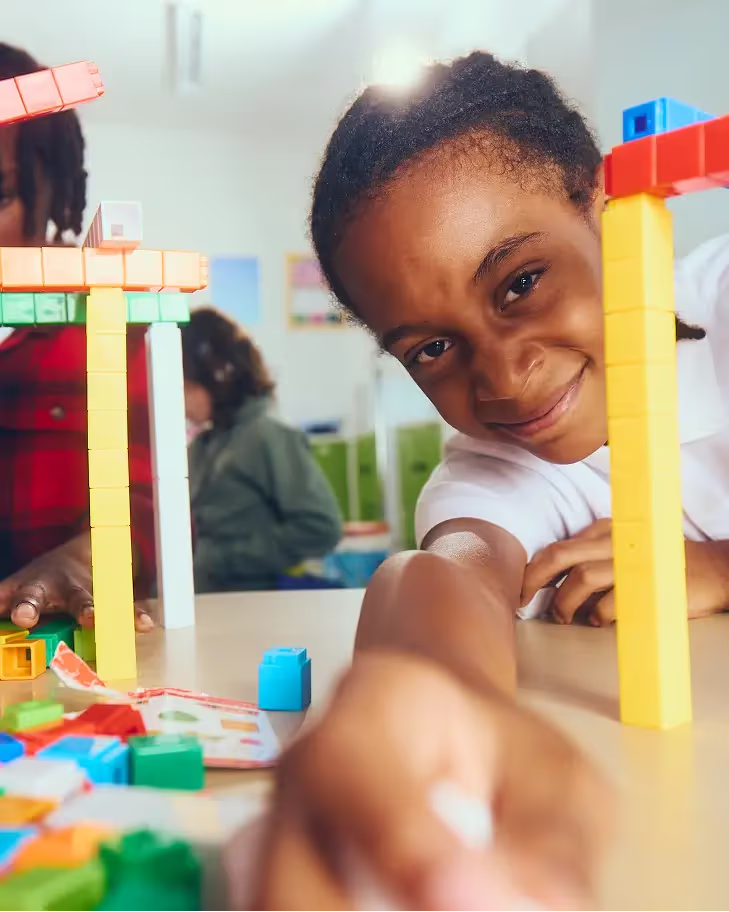
If you are comparing a microschool vs. private school, you are probably looking for the same thing in both: a smaller, more personal place for your child to learn. The two models overlap, but they are not the same. A microschool is a very small school, often one room or a handful of rooms. A private school is an independent school that can be small or large, and it usually comes with an established structure of grades, classrooms, and assessments. Primer is a private school, not a microschool. It is built to give families small classes with the structure of an established school. Here is how the two models compare, and what to ask before you choose.
A microschool is a very small, close-knit school. If you're wondering what is a microschool, it typically consists of a few dozen children, sometimes fewer, learning together with one teacher or guide leading each group. Many meet in a converted house or a community building, and many mix ages, so students in neighboring grades share a room.
Microschools vary a lot. Some follow a traditional academic program, while others are project-based or self-directed. Because there is no single standard, it helps to ask what a particular school actually does all day.
A private school is an independent school funded by tuition, scholarships, and donations rather than by the local public school district. Private schools range from a few dozen students to well over a thousand. Most have grade-level classrooms, a set curriculum, and a regular way of tracking progress. Some are religious and some are not.
The key point is that a private school can be large and traditional, or small and personal. A small private school can offer much of what families like about microschools, with more structure behind it.
Both models aim for close relationships between teachers and students, more individual attention, and room to adjust the pace to the child. Both are chosen by families who want a different experience from a large school. And both can be excellent. The real difference is structure and scale, not whether children can do well.
Some schools sit between the two: small classes, a clear academic program, and the stability of an established school. Families get the personal feel of a microschool with the structure of a private school.
Primer is one example. It is a private school, not a microschool, and a K-8 school network built around small classes and a clear framework. Each child takes a nationally normed assessment in math and literacy to find their starting level, then moves ahead as they master each concept. Families follow progress through weekly goals and benchmarks three times a year, and students work on hands-on projects that connect school to real life.
A microschool may be a good fit if:
A small private school may be a better fit if:
These questions help you see past the brochure, whichever type of school you visit:
Tuition varies widely, and many families are surprised by how much help may be available. Some states offer scholarships or funding that can reduce what a family pays, so ask every school you visit about options in your state.
A new federal scholarship tax credit is also on the way. It starts in 2027 and encourages donations to scholarship funds that help families afford the school they choose. You can learn how it works at Tax Credits for Education.
A microschool and a private school can both give your child close attention and a strong start. A microschool offers the smallest setting and the most flexibility. A small private school adds structure, continuity, and an established program. Visit a few of each, ask plenty of questions, and choose the one where your child will be known and challenged.
Ready to see what a small, structured school looks like in practice? Find a Primer school near you and take a tour.