Article
Texas Education Freedom Accounts: What Parents Need to Know
What TEFA is, who qualifies, how much each child gets, and what to do before the next round.
Florida has more private school options than most families can visit in a single school year. Some are small and church-based. Some are national networks. Some opened last year. This guide covers how to choose a private school for a child in kindergarten through eighth grade: what to check, what to ask on a visit, and how families pay for it.
Florida gives private schools a lot of freedom to run their own programs. Every private school registers with the Florida Department of Education and files a survey each year; owners go through a criminal background check, and school buildings are inspected for health and safety. The state does not accredit private schools or set their curriculum, so each school chooses its own grading, testing, and standards, and many also earn accreditation from independent groups.
That freedom is a big reason private schools can look so different from one another. The best way to find the right fit for your child is to ask good questions and visit, and the rest of this guide shows you what to look for.
Ranking lists are a fine place to start. But the best private school in Florida for one child can be the wrong one for another. A school that suits a fast, independent reader may not suit a child who needs more support.
When you read a school's website, look past the awards and look for four things. First, a clear answer to how the school knows what your child should learn next. Second, a plan for kids who are ahead and kids who are behind. Third, progress updates you can actually read. Fourth, staff who answer your questions directly. A school that can show you all four has usually thought hard about how it teaches.
Start with accreditation. In Florida, it is optional. Some schools are accredited by an independent group, such as Cognia, and some are not. Neither choice is automatically good or bad, but accreditation means an outside team has reviewed the school's programs, leadership, and student support. Ask which group accredited the school and when.
Then ask who teaches. What training do teachers get each year? How long has the head of school been in the job? State law requires background checks for a school's chief administrator, so ask what the school does for everyone else who works with children.
On safety, ask how visitors check in, whether doors are locked during the school day, how often the school runs emergency drills, and how it handles bullying. Write down the answers. A good school gives you specifics.
In the K-8 years, reading, writing, and math are the foundation for everything else. So ask three things.
How do you find out where my child is starting? Some schools use a nationally normed test. Others rely on teacher judgment. Both can work, but you should know which one you are getting.
How fast will my child move? In many classrooms, everyone does the same lesson on the same day. In others, students move ahead once they show they understand a skill, so one child can be working on fractions while the child next to them is still on multiplication.
How will I know how my child is doing? Ask how often you get an update and what is in it. A report card twice a year tells you less than weekly goals and a test every few months.
Every classroom has both. Ask what the school does for a child who needs extra help with reading, and for a child who is ready for harder math than their grade level. Ask who provides that help and whether it costs extra. If your child has an IEP or a 504 plan, share it with admissions early and ask what the school can and cannot support. A school that is honest about its limits is easier to trust than one that says yes to everything.
Tuition varies a lot, so get the full number in writing. Ask what it covers and what it does not: enrollment fees, uniforms, supplies, aftercare, and yearly increases. Ask about the payment plan and the refund policy before you sign anything.
Florida families can use state scholarships to cover part or all of tuition. Step Up For Students runs the Florida Tax Credit Scholarship and the Family Empowerment Scholarship for Educational Options. Florida residents who are eligible to enroll in public school can apply regardless of income, though lower-income families are prioritized. Step Up reports an average award of about $8,000, and amounts vary by county and student. Not every private school accepts these scholarships, so ask each school before you apply.
Many schools also have their own aid. Our guide to private school financial aid explains the types and how to apply. A new federal scholarship tax credit also starts in 2027. It encourages donations to scholarship-granting organizations, and Florida is on the IRS list of states taking part. Tax Credits for Education tracks how it works.
Go on a regular school day if you can. Watch how teachers talk to students and how students talk to each other. Look at what the kids are doing, not just what the walls look like. Then bring these questions:
The way a school answers is often as useful as the answer.
At least two or three. It is easy to fall for the first campus you tour. Seeing a few helps you notice what each one does well and where each falls short.
Make a one-page chart with a row for each school and the same columns every time: cost after scholarships, hours and aftercare, how progress is measured, drive time, and what happens after eighth grade. Add what applying takes at each school: the application steps, the deadlines, any fees, and whether it accepts the scholarship you plan to use. Fill it in right after each visit, while the details are fresh.
If public options are also on your list, our comparison of charter school vs. private school covers the differences.
Earlier than you think. Popular schools can fill up months before the school year starts, and scholarship applications run on their own calendar. Start at least several months ahead. Ask each school for its application deadlines, whether it keeps a waitlist, and when it will tell you its decision. Then check the scholarship dates on Step Up's website so one deadline does not cancel out the other.
A K-8 school keeps your child in one community for nine years. Teachers get to know the whole family. Older students become role models for younger ones. And your child skips the switch between elementary and middle school, which is a big change for many kids. Ask where eighth graders go next, so you know how the school prepares them for high school.
Primer is a private K-8 school with campuses across Florida, including Miami, Fort Lauderdale, Tampa, and Ocala. Here is how it works, so you can compare it with any school on your list.
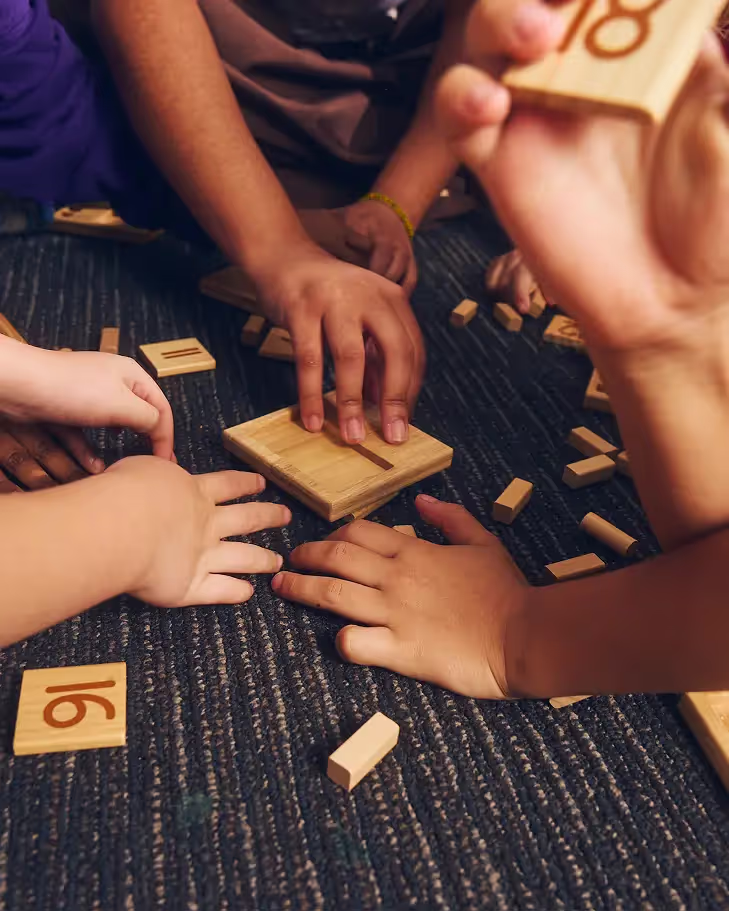
Every child starts with a nationally normed assessment in reading and math, so educators know exactly where to begin, not just which grade the child is in. Students move forward once they show they understand a skill. The school day runs from 8:30 a.m. to 3:00 p.m. Mornings go to literacy and math, in small groups with an educator or working independently. Afternoons are for Pursuits, hands-on projects built around what students are curious about. There are no bells and no rushing between classrooms.
Families see progress through weekly goals and a formal assessment three times a year, and the Primer App shows schedules, attendance, and progress. Primer is accredited with merit by Cognia.
Primer accepts FES and FTC scholarships through Step Up For Students. Primer says most families pay between $0 and $3,000 a year, depending on household income, and the tuition page has the full breakdown. To get started, fill out the short form on the admissions page and set up a parent meeting. Applying is free, and a $20 enrollment fee secures your child's place. You can also find a Primer school in Florida near you.
Choosing a private school in Florida takes some work, but it comes down to a few things. Know your child. Check the basics. Ask how the school teaches and how it measures progress. Get the cost in writing. Then visit, and trust what you see. The right school is the one where your child will be known and challenged.